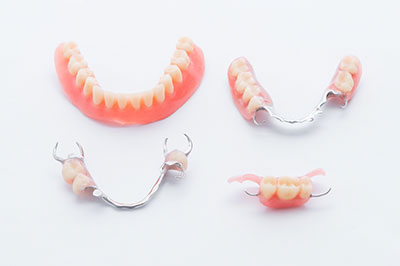
According to the National Institute of Dental and Craniofacial Research (NIDCR), 3.75% of adults 20 to 64 in the United States are completely edentulous. For the overall population in this age group, the average number of remaining teeth is 24.92 out of a total of 32 permanent teeth.
One of the ways to replace missing teeth to restore oral function and appearance is with dentures. Depending upon the needs of a case, dentures can be used to replace either a few teeth that have been lost or all of the teeth in the upper or lower jaws. In addition to reestablishing the look of a complete and natural smile, dentures also restore support to the natural contours of the face to eliminate the “sunken” appearance that results from losing multiple teeth. Whether teeth have been lost for reasons of tooth decay, gum disease, a medical condition, congenital anomaly, or trauma, dentures are an effective method of care.
Dentures are removable appliances that are designed to precisely and comfortably rest on top of the gums that cover the jawbones. They can be taken out of the mouth for brief periods of time to fulfill the oral hygiene requirements of maintaining the underlying tissues, cleaning the dentures, and sleeping.
Types of Dentures
The two main types of dentures are: full dentures and partial dentures. Both types are custom fabricated based on the exact specifications obtained from dental impressions and detailed functional as well as esthetic information provided by the dentist.
Full Dentures
Full dentures, which can also be referred to as, “complete dentures,” are designed to replace all of the upper or lower teeth. A complete maxillary denture, more commonly known as a, full upper denture, typically consists of a base that covers the roof of the mouth with a full complement of artificial teeth set around the section covering the dental arch. On the other hand, a complete mandibular denture, or full lower denture, is designed to accommodate the tongue and is horseshoe shaped with teeth set along the portion that covers the underlying dental arch.
Partial Dentures
A partial denture is a type of removable prosthesis that is designed to restore a complete and functional smile in cases where multiple teeth are missing or require extractions, while some healthy teeth remain in the dental arch. Custom fabricated for a precise fit and cosmetically pleasing appearance, partial dentures are typically secured and stabilized with clasps or precision attachments to select teeth adjacent to the edentulous areas. Depending upon the number of teeth being replaced as well as the functional and aesthetic requirements of the case, a partial denture can be fabricated from a combination of cast metal and acrylic materials, acrylic alone, or thermoplastic resins such as ValplastTM, Flexite®, Duroflex® and tcs®.


Today, it’s easier than ever to replace missing teeth and achieve natural-looking, durable, and long-lasting results! Depending on a patient’s dental needs, lifestyle, expectations of care, and budget, choices can include conventional fixed bridgework, dental implants, or removable partial and complete dentures. At the office of Lake Harris Dental, we’ll discuss all your options in care and answer all your questions as you choose the solution that’s right for you.
With advances in dental materials and technology, today’s dentures are more comfortable and realistic-looking than ever before.
Whether you wear partial or complete dentures, it’s essential to see the dentist for routine care. Besides checking the fit and condition of your dentures and making any necessary adjustments, you’ll also receive a comprehensive exam to check on the health of any remaining teeth as well as the soft and hard tissues in and around the oral cavity.
A same-day denture offers an accelerated design and fabrication process that allows a patient to go from impression taking to denture insertion in a single day.
For patients who don’t want to wait after having teeth extracted, an immediate denture can be inserted the same day your teeth are removed. Sometime later you may need the denture relined to address any changes in its fit once the extraction sites have completely healed.
While no one wants to drop or break a partial or complete denture, accidents do happen. The good news is that in some cases, your partial or complete denture is reparable. It all depends on the extent of the damage. Don’t hesitate to contact our office if you’ve broken or damaged your denture. We’re happy to help.
The simple act of taking your partial denture in and out can cause certain types of metal clasps to loosen over time. When you come in for your checkup visit or contact our office for an adjustment, we’ll assess the fit of your partial and tighten the clasps for improved stability and comfort.
While rebuilding a complete smile is a worthwhile investment, our office is sensitive to the costs involved in dental care. We customize care and will discuss which treatment options address your needs, lifestyle, and budget. How much a new denture will cost depends on the type of the prosthesis, its design, and the materials used to fabricate the supportive base, teeth, and clasps or precision attachments. Dentures that include the placement of dental implants for added retention and stability typically involve additional costs.
If you have dental insurance, your coverage may include a new or replacement set of dentures. Our staff is happy to review your coverage with you to ensure you are maximizing your insurance benefits while minimizing any out of pocket expenses.
At the office of Lake Harris Dental, we provide an extensive range of dental services, including the latest and most effective methods to help patients with missing teeth rebuild complete and beautiful smiles. As skilled and experienced professionals, we recognize that every patient is different, and every smile is unique. We’re passionate about what we do and take great pride in providing personalized treatment plans while treating our patients as valued partners in care.
Dentures are removable prosthetic appliances that replace missing teeth and the supporting structures of the mouth. They consist of artificial teeth set into a gum-colored base that rests on the oral tissues and adjacent teeth when present. Modern materials and fabrication techniques aim to recreate natural tooth form and color while restoring basic chewing and speaking function.
Partial dentures fill gaps when some natural teeth remain, while complete dentures replace an entire upper or lower arch. Because they are removable, dentures allow for straightforward cleaning of both the prosthesis and the underlying gums. Proper fit and periodic adjustments help maintain comfort, function, and the health of remaining oral tissues.
The main categories of dentures include complete (full) dentures, partial dentures, and hybrid options that incorporate implants or precision attachments. Complete dentures replace all teeth in an arch, while partials rely on existing teeth for support and help prevent unwanted tooth movement. Hybrid and implant-supported designs use implants or special connectors to improve retention and reduce movement during function.
Choosing the right type depends on the number and condition of remaining teeth, the health of the gums and jawbone, and the patient’s functional and aesthetic goals. Your dentist evaluates oral anatomy, bite relationships, and long-term maintenance considerations to identify the most appropriate solution. A careful exam and discussion of lifestyle needs will guide a personalized recommendation.
Candidacy for dentures is determined by a clinical evaluation that considers gum health, bone support, existing teeth, and overall oral hygiene. People who have lost multiple teeth or whose remaining teeth are not restorable often benefit from partial or complete dentures as a predictable way to restore function. The dentist also assesses medical history and habits that could affect healing and long-term success.
In some cases, preparatory treatments such as extractions, periodontal therapy, or minor bone reshaping are recommended before fabricating a final prosthesis. Implant-supported options may be discussed for patients seeking enhanced retention and stability. A comprehensive consultation clarifies which pathway best meets functional needs and personal preferences.
Replacing missing teeth with a well-designed denture helps restore facial support and can reduce the sunken look that sometimes accompanies tooth loss. The prosthesis reestablishes the vertical dimension of the bite and supports the lips and cheeks to create a more balanced facial profile. Restored tooth form also contributes to clearer speech and more efficient chewing, which supports nutrition and quality of life.
Dentures also play a preventive role by closing gaps that might otherwise allow adjacent teeth to drift and create bite problems. Regular monitoring ensures the prosthesis continues to fit correctly and that the underlying tissues remain healthy. When needed, relines or adjustments are performed to maintain optimal fit as the oral anatomy remodels over time.
The denture process begins with a detailed examination, impressions, and records to capture jaw relationships and facial proportions. Laboratory steps typically include model fabrication, teeth selection, and try-in appointments to verify fit, bite, and appearance before the final prosthesis is processed. Pre-prosthetic care such as extractions or treatment of gum disease may be completed first to optimize the foundation for the denture.
After delivery, initial follow-up visits address sore spots and minor adjustments as tissues adapt to the new appliance. Additional relines or refinements may be scheduled once healing is complete or as wear patterns emerge. At the office of Lake Harris Dental we coordinate clinical and laboratory work to improve predictability and ensure the denture meets functional and aesthetic goals.
An immediate denture is fabricated in advance and placed at the time of tooth removal so the patient leaves the appointment with teeth in place during healing. This approach preserves appearance and basic function while the sockets and gums change shape, although subsequent relines or a new final denture are often needed as tissues remodel. A transitional denture serves a similar purpose and may be converted or replaced when healing stabilizes.
An overdenture gains additional support from retained tooth roots or attachments to prepared teeth, which can help preserve bone and improve stability. Overdentures can also be designed to interface with implants for enhanced retention. These approaches are selected based on remaining anatomy, long-term goals, and the desire for improved comfort or preservation of oral structures.
Implant-supported dentures attach to dental implants placed in the jaw, providing increased retention and reduced movement compared with conventional suction- or adhesive-retained prostheses. The added stability improves biting efficiency and confidence during speech and eating, and it can reduce sore spots caused by excessive denture movement. Implant attachments can be designed as removable overdentures or as fixed hybrid prostheses depending on clinical goals.
Implant-retained options also help preserve bone by transmitting functional forces to the underlying jaw structure, which slows resorption compared with unsupported dentures. Not every patient is a candidate for implants, and planning includes evaluation of bone volume, medical history, and long-term maintenance needs. When appropriate, implant solutions are integrated into the overall treatment plan to enhance comfort and function.
Daily care includes rinsing the denture after meals to remove food debris, brushing the prosthesis with a soft denture brush and nonabrasive cleaner, and soaking it overnight as recommended by the dentist. It is equally important to clean and examine the gums, tongue, and any remaining natural teeth to maintain oral health and catch changes early. Avoid exposing dentures to hot water and use gentle techniques to prevent warping or damage.
When not worn, dentures should be stored in water or a cleansing solution to keep them from drying and losing shape. Regularly inspect the appliance for cracks, wear, or loose teeth and bring any concerns to your dental team promptly. Routine professional checkups help identify the need for adjustments, relines, or repairs before problems affect comfort or function.
The functional lifespan of a denture varies with materials, wear patterns, and changes in the underlying jawbone, but many patients can expect years of service with proper care. As the alveolar bone remodels after tooth loss, the fit of the denture can loosen, which is why periodic relining is often recommended to restore close contact with the tissues. Relines, rebasing, or repairs can extend the useful life of a prosthesis depending on the extent of wear.
When the denture no longer provides adequate support, stability, or aesthetics despite relines and repairs, replacement or conversion to an implant-retained option may be discussed. Regular examinations allow the dentist to monitor fit and function and to recommend proactive steps to maintain comfort. Timely attention to fit issues helps prevent sore spots and preserves oral health over the long term.
Adapting to new dentures commonly involves increased saliva, slight changes in speech, and the need to relearn chewing patterns, and most people adjust within a few weeks with gradual practice. Starting with softer foods, cutting items into smaller pieces, and practicing speaking aloud can accelerate comfort and function. Minor sore spots are common early on and usually resolve after small adjustments to the denture by the dentist.
If irritation persists, the dental team will identify pressure points and make selective adjustments or recommend a temporary reline to improve contact. Persistent problems may signal the need for further clinical evaluation or a change in design to distribute forces more evenly. Regular follow-up visits are important to ensure the prosthesis performs well and that oral tissues remain healthy.

Looking to book your next dental visit or need more information about our services?
Getting in touch with Lake Harris Dental is simple and stress-free. Our welcoming team is happy to help you schedule an appointment, explain treatment options, and answer any questions you may have. Whether you choose to call, email, or use our easy online contact form, we’re ready to assist you. Take the next step toward a healthier, more confident smile by contacting us today and experience dental care tailored just for you.