Tooth loss affects millions of people and can change the way you eat, speak, and smile. An estimated 178 million Americans are missing at least one tooth, and tens of millions have lost several. Whether due to decay, gum disease, injury, or other factors, missing teeth create gaps that can affect oral health, facial structure, and self-confidence. Fortunately, modern dental implants provide a reliable path to rebuilding a complete, natural-feeling smile.

Implants are designed to mimic the structure and function of a natural tooth by replacing the root as well as the visible crown. Unlike removable options, implant-based restorations integrate with the jawbone to deliver stability, preserve bone volume, and prevent adjacent teeth from shifting. The result is a restoration that performs like a natural tooth for most daily activities, including chewing and speaking.
At Lake Harris Dental, our approach emphasizes careful assessment and long-term outcomes. We evaluate your oral health, bone anatomy, and restorative needs so each implant solution is tailored to your situation. Whether you need a single tooth replaced or a full-arch restoration, the goal is the same: restore function, support oral health, and help you feel comfortable and confident in your smile again.
Because implant dentistry blends surgical precision with prosthetic design, treatment often involves a coordinated plan that covers imaging, surgical placement, and the restoration that sits on top of the implant. When performed with modern techniques and materials, implants can offer predictable, durable results that integrate seamlessly into everyday life.
Dental implants are small, biocompatible posts—typically made from titanium or zirconia—that are placed in the jaw to replace missing tooth roots. Once positioned, the implant acts as a sturdy foundation for an attached crown, bridge, or denture. This root-level support is what sets implants apart from conventional restorations and allows them to transfer chewing forces into the bone, which helps preserve facial shape and oral function.
Following placement, the surrounding bone grows and bonds to the implant surface through a process called osseointegration. This biological fusion creates the stability necessary to support permanent restorations. Depending on the case, a temporary prosthesis may be used while healing takes place, followed by the final crown or bridge once integration is complete.
Implants can support a variety of restorative options, from a single crown to multi-unit bridges and full-arch solutions. Their versatility makes them an excellent choice for patients who want durable, natural-looking replacements that protect neighboring teeth and maintain jawbone health.
Beyond cosmetic improvements, dental implants provide measurable health advantages. Because they transmit biting forces into the jawbone, implants help maintain bone density and support the soft tissues that frame your smile. This preservation of bone prevents the sunken appearance that can occur when teeth are missing for long periods.
Implants also protect adjacent natural teeth. Traditional fixed bridges often require reshaping healthy neighboring teeth to anchor the prosthesis. Implants eliminate the need to modify those teeth, allowing them to remain intact and functional. Over time, this conservative approach helps preserve the long-term health of the remaining dentition.
Another practical advantage is stability. Implant-supported restorations are anchored in place and do not slip or shift the way removable dentures can. That stability restores confidence when eating, speaking, and engaging socially, and it reduces the daily maintenance and adhesives often associated with removable prostheses.
Durability is a further benefit when implants receive proper care. With good oral hygiene and regular professional checkups, implant restorations can provide many years of reliable service, making them a sound choice for patients seeking a long-term solution.
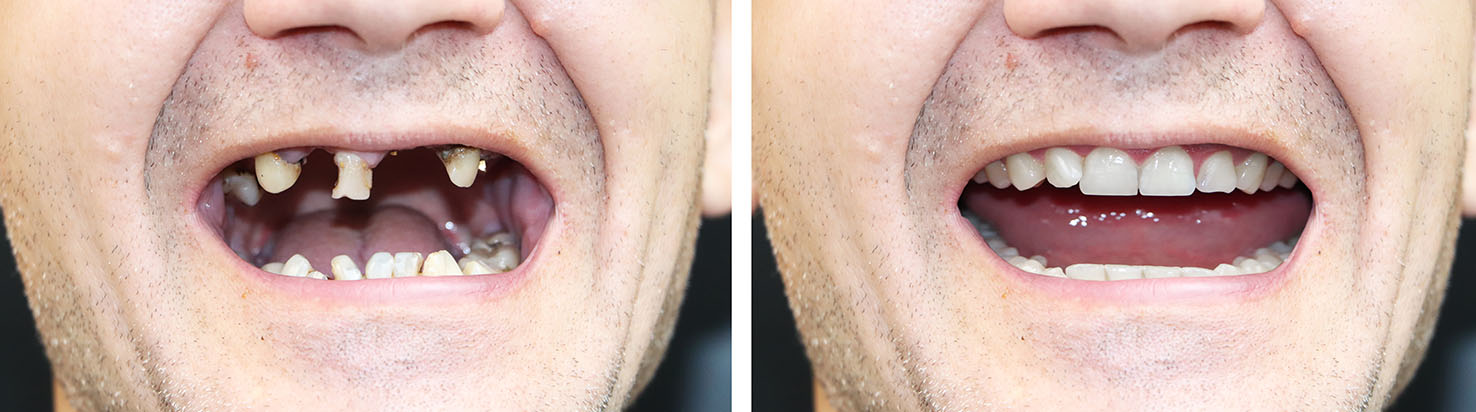
Good candidates for dental implants are those with healthy gums, adequate bone volume, and a commitment to oral hygiene. That said, many situations once considered limiting can now be addressed with modern techniques like bone grafting, ridge augmentation, or staged rehabilitation. A thorough clinical exam and 3D imaging help our team determine bone quality, nerve positions, and the ideal placement for implants tailored to your anatomy.
We consider functional needs, aesthetic goals, medical history, and lifestyle when developing a treatment plan. This individualized approach allows us to recommend options that balance predictability with long-term performance, ensuring your new teeth look natural and function dependably.
Placement of an implant is typically performed as a minor outpatient procedure under local anesthesia, with sedation options available for patient comfort. The surgical phase focuses on precise positioning to maximize bone contact and avoid sensitive structures. In many cases, a temporary restoration can be provided so patients leave with an improved appearance while the implant integrates.
Healing times vary based on the site and the type of implant, but most patients can return to normal activities within a few days. The osseointegration process takes several months, after which the final crown, bridge, or denture is fabricated and attached. Throughout recovery, we provide clear post-operative instructions and follow-up appointments to monitor healing and ensure optimal outcomes.
Because successful implant placement depends on sufficient bone to stabilize the post, bone grafting is sometimes recommended. Bone grafts rebuild lost volume so the implant has a solid foundation. Grafting can be performed at the time of extraction, staged before implant placement, or simultaneously with implant surgery depending on the clinical situation and timing.
Bone grafting techniques and graft materials have advanced significantly, making it possible to treat many cases that previously would have required prosthetic compromises. Your clinician will explain the reasons for grafting, the chosen material, and the expected recovery so you understand each step of the process.
Implant dentistry blends surgical skill with restorative craftsmanship. For the best results, the surgical team and restorative dentist work closely together from the planning stages through to the delivery of the final prosthesis. This coordinated approach ensures implants are placed with future restorations in mind, so your new teeth function well and look natural within your smile line.
Replacing missing teeth with implant-supported restorations can preserve oral health, restore function, and renew confidence. Whether you’re considering a single implant or a comprehensive full-arch plan, careful evaluation and personalized treatment planning are essential to success. Our practice focuses on predictable outcomes that match your goals while protecting the health of your remaining teeth and bone.
If you’d like to learn more about implant dentistry or schedule a consultation, contact Lake Harris Dental to discuss your options. Our team is ready to answer your questions and help you determine the best path to rebuild a healthy, comfortable, and attractive smile.


If you've lost a tooth due to injury, decay, gum disease, or any other reason, we recommend dental implants to replace missing teeth. Dental implants come the closest to replicating the look, feel, and function of your natural teeth.
Dental implants are placed into the jawbone and mirror the same function as the root of a tooth. The procedure for dental implants is usually performed while a patient is sedated. Patients who undergo IV sedation must have an empty stomach and transportation home following the procedure. Most sedation patients will have little to no memory of the procedure occurring.
Generally, dental implants are made out of a biocompatible metal such as titanium. Biocompatible metals are also used for other common bone implants (such as shoulder, hip, and knee replacements). The visible portion of the implant is usually made out of porcelain and is custom-made to match your existing teeth.
Dental implants are designed to fuse to the bone, which makes them become permanent fixtures. Typically speaking, the success rate is nearly 100%. There are few cases in which the implant will not fuse as intended and must be removed. If this happens to occur, the procedure can be attempted again a few months later.
Dental implants are not usually covered by dental insurance, but may be covered under a patient's medical insurance. Our office and your insurance company can discuss coverage options with you based on your individual case and treatment plan.
It's easy... just take care of an implant as if it's a natural tooth! This involves regular brushing, flossing, and dental checkups. If you have any concerns about your implant, contact us immediately.
Dental implants are small biocompatible posts, typically made from titanium or zirconia, that replace missing tooth roots and provide a stable foundation for restorations. A crown, bridge, or denture attaches to the implant so the replacement functions and looks much like a natural tooth. Because implants restore both root and crown, they help preserve jawbone structure and maintain facial support that is often lost after tooth extraction.
Implant-supported restorations transfer chewing forces into the bone, which reduces the risk of adjacent teeth shifting and helps maintain long-term oral function. The treatment can be tailored from single-tooth replacements to full-arch solutions depending on the patient’s needs. At Lake Harris Dental we emphasize careful planning and modern restorative techniques to integrate implants seamlessly into each patient’s smile.
Good candidates for dental implants generally have healthy gums, adequate bone volume, and a commitment to maintaining oral hygiene. Many patients who were once considered poor candidates can now be treated with adjunctive procedures such as bone grafting or ridge augmentation. A thorough clinical exam and 3D imaging allow clinicians to evaluate bone quality, nerve position, and other factors that influence candidacy.
Medical history and lifestyle also factor into treatment planning, so patients with certain systemic conditions or habits like heavy smoking should discuss risks and management strategies with their dentist. Age alone is not a limiting factor; rather, overall oral and general health determine suitability. The goal is to develop a predictable plan that balances functional needs and aesthetic expectations.
After placement, implants undergo a process called osseointegration, during which surrounding bone grows and bonds to the implant surface to create a stable connection. This biological fusion is essential because it provides the support necessary for long-term function and prevents micromovement that could compromise the restoration. Successful integration preserves bone density and helps maintain the natural contours of the face and jaw.
Because implants act like natural tooth roots, they distribute biting forces into the bone and reduce the bone loss commonly seen after tooth extraction. Monitoring the integration process with follow-up appointments ensures the implant is stable before a final restoration is placed. When integration is complete, implants can support crowns, bridges, or dentures with predictable performance.
Implants can support a variety of restorations depending on the number and location of missing teeth. Options include single crowns for isolated tooth loss, implant-supported bridges for several adjacent missing teeth, fixed full-arch restorations that replace an entire upper or lower arch, and implant-retained overdentures that snap onto two or more implants for improved retention. Each restoration type provides different benefits in terms of stability, hygiene access, and aesthetics.
The selection of a restorative approach depends on functional needs, bone availability, and aesthetic goals. For example, a fixed full-arch solution commonly uses four to six implants to recreate a complete set of teeth that feels and functions like natural dentition. Implant-retained overdentures offer a removable hygiene option while delivering substantially more retention than conventional dentures.
Implant treatment begins with a comprehensive evaluation that includes a medical history, clinical exam, and 3D imaging to assess bone anatomy and plan ideal implant positions. The multidisciplinary plan coordinates surgical placement and restorative design so the implant is positioned with the final prosthesis in mind. When necessary, preparatory procedures such as extractions or bone grafting are scheduled before or at the time of implant placement.
Surgery is typically an outpatient procedure performed under local anesthesia with sedation options available for comfort, and a temporary restoration may be provided during healing. After osseointegration, the final crown, bridge, or denture is fabricated and secured to the implant(s). Throughout the process the team provides post-operative instructions and follow-up visits to monitor healing and confirm predictable outcomes at Lake Harris Dental.
Initial recovery from implant surgery usually takes a few days to a week, during which mild swelling, bruising, and discomfort are common and manageable with prescribed or recommended care. Most patients return to normal activities quickly, but the underlying osseointegration process typically requires several months to complete before the final restoration is attached. Your clinician will provide detailed post-operative instructions to support healing and reduce the risk of complications.
During the healing period, maintaining excellent oral hygiene and following dietary recommendations helps protect the surgical site and promotes successful integration. Follow-up visits allow the team to assess tissue healing, monitor implant stability, and make any necessary adjustments to temporary restorations. Communication with your dental provider about unusual pain or signs of infection ensures issues are addressed promptly.
Bone grafting is recommended when there is insufficient bone volume or density to stabilize an implant, which can result from long-term tooth loss, periodontal disease, or trauma. Grafting rebuilds the ridge so an implant has a solid foundation; it can be performed at the time of extraction, staged before implant placement, or concurrently with implant surgery depending on the clinical plan. Various graft materials and techniques allow clinicians to tailor the approach to the patient’s anatomy and timeline.
Recovery from bone grafting varies with the extent of the procedure but typically involves a controlled healing period before implant placement if staged grafting is used. The clinician will explain the chosen material, expected healing time, and follow-up schedule so patients understand each step. Advances in grafting techniques have expanded implant options for many patients who once required prosthetic compromises.
Proper home care is essential for the long-term health of dental implants and surrounding tissues; this includes brushing twice daily with a soft-bristled brush and cleaning between teeth and implants with floss, interdental brushes, or water flossers. Regular professional cleanings and exams help detect early signs of inflammation or complications so they can be managed before causing implant failure. Avoiding tobacco and managing systemic conditions that affect healing also contribute to implant longevity.
During routine visits your hygienist will use implant-safe instruments and techniques to maintain the restoration and monitor the health of soft tissues and bone levels. Your dentist will periodically evaluate the prosthesis for wear, fit, and function and recommend maintenance steps tailored to your restoration type. Consistent care and timely checkups help implants provide reliable service for many years.
As with any surgical procedure, implant placement carries risks such as infection, delayed healing, nerve irritation, or sinus complications in the upper jaw; however, careful planning and surgical technique reduce these risks. Early detection and management are critical, so patients are instructed to report persistent pain, swelling, or changes around the implant site. If complications occur, treatment can range from antibiotics and local care to more involved interventions such as grafting or implant revision depending on the issue.
Risk assessment during the planning stage, including the use of 3D imaging and a review of medical history, helps clinicians anticipate and mitigate potential problems. Close follow-up during the healing phase and routine maintenance thereafter further lowers the chance of long-term complications. A transparent discussion of risks and benefits before treatment helps patients make informed decisions about implant care.
Implant-supported restorations differ from traditional dentures and fixed bridges by replacing both the tooth root and the visible crown, which preserves bone and provides superior stability. Conventional bridges rely on adjacent teeth for support and may require alteration of healthy tooth structure, whereas implants allow neighboring teeth to remain intact. Removable dentures often lack the retention and chewing efficiency of implant-supported options and can contribute to more rapid bone loss over time.
The choice between implants, bridges, and dentures depends on clinical factors such as the number of missing teeth, bone availability, oral health, and patient preferences about maintenance and hygiene. Implant solutions tend to offer improved function and long-term oral health benefits when patients are appropriate candidates. Your dental team can explain how each option aligns with your goals and recommend a plan that balances function, appearance, and preservation of natural tissues.

Looking to book your next dental visit or need more information about our services?
Getting in touch with Lake Harris Dental is simple and stress-free. Our welcoming team is happy to help you schedule an appointment, explain treatment options, and answer any questions you may have. Whether you choose to call, email, or use our easy online contact form, we’re ready to assist you. Take the next step toward a healthier, more confident smile by contacting us today and experience dental care tailored just for you.