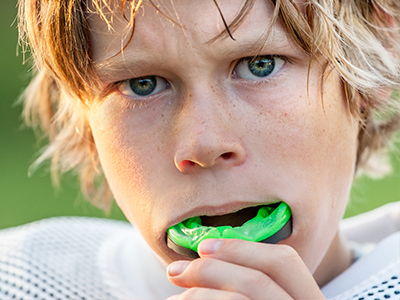
Protecting an athlete’s smile and facial structures is about more than avoiding a chipped tooth — it’s a matter of preventing concussions, soft-tissue injuries, and costly, long-term dental damage. Sports mouthguards are simple, effective tools that reduce risk across a wide range of activities, from youth soccer to adult recreational leagues. This page explains how mouthguards work, the options available, special considerations for orthodontic patients, and what to expect when you choose a custom device from a trusted dental practice.
Every sport carries some degree of contact, collision, or the chance of being struck by equipment or the playing surface. A properly fitted mouthguard absorbs and redistributes force, lowering the likelihood of fractured teeth, lacerated soft tissues, and jaw injuries. For athletes who participate in contact sports or high-velocity activities, a mouthguard is a first-line defense that complements helmets and other protective gear.
Beyond obvious trauma prevention, mouthguards can help reduce the severity of certain brain injuries by cushioning the jaw and limiting shock transfer through the skull. While no single device can eliminate all risks, consistent use of a well-designed mouthguard has been shown to meaningfully reduce both dental and orofacial injuries in organized play and informal recreation alike.
Wearing a mouthguard also supports long-term oral health. Even a seemingly minor dental injury can lead to complex treatments, root canal therapy, or tooth loss years later. For parents, coaches, and adult athletes, choosing protective equipment that encourages compliance and comfort makes an important difference in preventing avoidable harm.
There are three common categories of sports mouthguards, each offering different levels of fit, protection, and comfort. Ready-to-wear or stock mouthguards are inexpensive and available in sporting goods stores, but they typically offer the poorest fit and can interfere with speaking and breathing. These devices may be better than nothing for casual, low-risk activities, but they’re generally not recommended for sustained or high-impact sports.
Boil-and-bite mouthguards present an intermediate option: they are softened in hot water and then shaped around the teeth for a better fit. While they improve retention and comfort compared with stock guards, results can be inconsistent. Over time, material fatigue and imperfect molding can reduce protective properties, and adjustments after initial fitting are often limited.
Custom mouthguards fabricated by a dental professional provide the most reliable protection. Made from impression-based models of the patient’s mouth, these devices are tailored for fit, thickness, and breathing or speech needs. Custom guards tend to be more comfortable, offer superior retention, and are built to withstand repeated impacts while minimizing bulk and vibration transfer to the teeth and jaw.
Individuals undergoing orthodontic treatment, wearing braces, or recently receiving dental restorations require special attention when selecting a mouthguard. Braces create additional risk for soft-tissue injury — brackets and wires can lacerate the cheeks or lips during impact. A mouthguard designed for orthodontic patients should provide extra space and protection to prevent irritation and protect both the appliances and the supporting teeth.
Similarly, crowns, bridges, and implants may change how an appliance fits and functions. Dental work can create uneven surfaces or altered bite dynamics, which are better accommodated by a device that is carefully fitted and adjusted. Off-the-shelf options often can’t account for these nuances, whereas a clinician-fitted guard can be designed to sit comfortably without putting undue stress on restored teeth.
Discussing your dental history with the clinician who fits your mouthguard ensures that the appliance is made with your current needs in mind. In many cases, a custom solution offers the safest, most practical protection for patients with orthodontics or restorative treatments.
Choosing a custom mouthguard typically begins with a clinical assessment to understand the athlete’s sport, position, breathing needs, and any existing dental or orthodontic factors. A precise impression or digital scan of the teeth forms the basis for a guard that conforms closely to the mouth’s natural anatomy. This attention to detail improves retention, reduces movement during play, and minimizes interference with speech and respiration.
Custom guards are fabricated from resilient materials chosen for shock absorption and durability. Technicians layer and contour the material to achieve an optimal balance between protection and comfort, with particular attention to the biting surfaces and the appliance’s peripheral seal. The final product is trimmed and polished so it feels unobtrusive and encourages consistent use.
After delivery, a fitting appointment ensures the guard seats correctly and does not create bite problems. The clinician will provide guidance on how to wear the device, how to test fit during practice, and what adjustments might be necessary for comfort. Follow-up checks are recommended, particularly for growing athletes or those whose dental condition changes over time.
To preserve the protective properties of a mouthguard, daily cleaning and proper storage are essential. Rinse the device after each use, brush it gently with toothpaste or mild soap, and store it in a ventilated case to prevent bacterial growth. Avoid leaving a mouthguard in hot environments or exposing it to chewing pressure, which can deform the material and compromise fit.
Signs that a mouthguard needs replacement include visible wear, thinning, cracks, persistent odor, or a loosened fit. For children and adolescents, periodic replacement is also necessary to accommodate a changing bite and jaw growth. Even high-quality custom guards will eventually show fatigue from repeated impacts, so regular inspection is the best way to ensure ongoing protection.
When a mouthguard no longer fits properly or shows structural damage, continuing to use it may give a false sense of safety. A prompt consultation will determine whether a refit, repair, or new fabrication is the best course of action to maintain effective protection on the field or court.
Lake Harris Dental is committed to helping athletes protect their smiles with evidence-based guidance and professionally fabricated mouthguards. If you’d like to learn more about your options or schedule an evaluation, please contact us for more information.


A sports mouthguard is a protective oral appliance designed to cover the teeth and surrounding soft tissues to reduce the risk of dental and facial injuries during athletic activity. By absorbing and distributing impact forces, a mouthguard helps prevent fractured teeth, lacerations to the lips and cheeks, and damage to dental restorations. Properly fitted devices also reduce the transmission of shock through the jaw, which can lower the risk of certain jaw and facial injuries.
Beyond immediate trauma prevention, consistent mouthguard use supports long-term oral health by minimizing the likelihood of injuries that could require complex dental treatment later. Mouthguards are compatible with other protective equipment like helmets and face shields, and they are recommended for contact and high-velocity sports as part of a comprehensive safety strategy. Choosing a guard that fits well and is comfortable encourages regular use, which is essential for dependable protection.
There are three common categories of mouthguards: stock (ready-to-wear), boil-and-bite, and custom-fabricated devices. Stock guards are preformed and inexpensive but typically provide poor fit and limited protection, while boil-and-bite guards can be softened in hot water and molded to the teeth for improved retention. Custom mouthguards are made from impressions or digital scans of the mouth and provide the best combination of fit, comfort, and consistent shock absorption.
Each type balances cost, convenience, and performance differently, so the right choice depends on the athlete's level of play, comfort needs, and any existing dental conditions. For athletes engaged in frequent or high-impact sports, a custom appliance usually offers superior protection and durability. Evaluating fit, breathing, and speech while wearing a guard helps determine which option will realistically be used during play.
Custom mouthguards are generally worth the extra effort for athletes who play contact or high-velocity sports regularly because they are tailored to an individual's bite and oral anatomy. The precision fit reduces movement during activity, improves comfort for extended wear, and allows technicians to optimize thickness where shock absorption is most needed. This tailored design also minimizes bulk, making it easier to breathe and communicate while providing more reliable protection over time.
While boil-and-bite guards can be a step up from stock devices and may be appropriate for casual or occasional players, they often show material fatigue and fit changes that diminish protection. For athletes with braces, crowns, or implants, a custom-fabricated guard is a safer option because it can be designed to accommodate appliances and restorations. A consultation with a dental professional clarifies whether the benefits of a custom guard justify that choice for a given athlete.
Athletes undergoing orthodontic treatment or who have crowns, bridges, or implants need a mouthguard that accounts for altered oral anatomy and appliance hardware. Braces add risk for soft-tissue injury from brackets and wires, so guards intended for orthodontic patients typically provide additional space and cushioning to prevent irritation and protect both the appliances and the teeth. Dental restorations can change bite relationships and create uneven surfaces that are best managed with a clinician-fitted device to avoid stress on restored teeth.
Over-the-counter options rarely accommodate these complexities, so a custom or clinician-adjusted guard is often recommended for athletes with orthodontics or significant restorative work. Regular follow-up is important because tooth movement or changes in dental work can affect fit over time. Discussing your dental history and current appliances with the clinician fitting the guard ensures the appliance is designed with those specific needs in mind.
Mouthguards are primarily designed to protect teeth and soft tissues, but they can also play a role in reducing the transmission of impact forces that contribute to certain types of head and jaw trauma. By cushioning the jaw and helping to dissipate force, a well-fitted mouthguard may reduce the amount of shock that travels through the jaw to the skull during some impacts. While no mouthguard can eliminate concussion risk entirely, evidence suggests that consistent use of quality appliances can lower the severity of some orofacial and jaw-related trauma.
Concussion prevention is multifactorial and depends on sport-specific risks, helmet design, neck strength, and playing technique in addition to oral protection. Athletes and coaches should view mouthguards as one component of a broader safety strategy rather than a standalone solution. For players at higher risk of head injury, combining properly fitted mouthguards with other protective measures offers the best opportunity to reduce harm.
The process for obtaining a custom mouthguard typically begins with a clinical assessment to evaluate the athlete's sport, position, breathing needs, and any dental or orthodontic considerations. A precise impression or digital scan of the teeth is taken to create a model that guides laboratory fabrication, ensuring the finished appliance conforms closely to the athlete's oral anatomy. Technicians then layer and contour resilient materials to achieve an optimal balance between thickness for protection and minimal bulk for comfort.
At the delivery appointment the clinician checks fit, occlusion, and retention, making minor adjustments as needed to avoid bite changes or irritation. The team will also provide instructions on using the guard during practice and competition and on what to watch for in terms of fit and wear. Periodic re-evaluation is recommended, especially for growing athletes or after significant dental changes, to maintain reliable protection.
Daily cleaning and proper storage help preserve a mouthguard's protective properties and reduce bacterial buildup. After each use, rinse the guard under cool water and gently brush it with toothpaste or mild soap, then allow it to air-dry before storing it in a ventilated case. Avoid hot water, direct sunlight, or leaving the appliance in a hot car, as heat can deform the material and compromise fit.
Regularly inspect the guard for cracks, thinning, or persistent odors, which indicate bacterial saturation or material fatigue. Replace or repair the appliance when structural damage appears or if the fit loosens, since a compromised guard provides a false sense of security. Keeping the case clean and storing the guard away from young children or pets will also prolong its lifespan.
A mouthguard should be replaced when it shows visible wear such as thinning, cracks, tears, or permanent deformation that affects fit and retention. Persistent bad odor that does not resolve with cleaning, a consistently loosened fit, or new discomfort when wearing the guard are also strong indicators that replacement or refitting is needed. For children and adolescents, periodic replacement is expected to accommodate growth and changing bite relationships.
Even high-quality custom guards experience material fatigue after repeated impacts, so routine inspection after practices and games is important to identify early signs of failure. Continuing to use a damaged or ill-fitting appliance can increase injury risk, so prompt consultation with a dental professional will determine whether repair, refit, or new fabrication is the appropriate next step. Maintaining records of fabrication date and any adjustments makes it easier to track wear over time.
Well-designed mouthguards balance protection with minimal interference to breathing and speech, which encourages athletes to wear them consistently. Custom-fabricated guards are contoured to maintain airway space and reduce obstruction, while thinner designs around the anterior teeth can improve verbal communication without compromising safety. Boil-and-bite guards may improve on stock devices but can still create bulk that affects comfort, so fit testing during practice helps determine real-world performance.
Athletes should try a mouthguard in simulated practice conditions to assess breathing and communication and request clinician adjustments if necessary. Ensuring the appliance seats securely and does not move when speaking or inhaling is key to both safety and usability. Coaches and trainers can support compliance by allowing short break-in periods and encouraging athletes to adapt to the guard during noncompetitive drills.
To arrange an evaluation and custom mouthguard fitting, contact Lake Harris Dental to schedule a clinical assessment that reviews sport type, dental status, and individual fit needs. During the appointment the clinician will take an impression or digital scan and discuss design options that balance protection, comfort, and breathing or speech requirements. The practice will then coordinate fabrication and delivery appointments to ensure the final appliance is properly fitted and adjusted.
Follow-up visits are recommended to check fit over time, particularly for growing athletes or those with changing dental work. Bringing the mouthguard to routine dental appointments allows the team to inspect it for wear and make timely recommendations. If you have specific questions about orthodontic appliances or restorations, mention them when scheduling so the fitting can be planned accordingly.

Looking to book your next dental visit or need more information about our services?
Getting in touch with Lake Harris Dental is simple and stress-free. Our welcoming team is happy to help you schedule an appointment, explain treatment options, and answer any questions you may have. Whether you choose to call, email, or use our easy online contact form, we’re ready to assist you. Take the next step toward a healthier, more confident smile by contacting us today and experience dental care tailored just for you.